Kamis, 31 Januari 2013

Photo: Operations Process the Blind and Deaf Orangutan Due Brunt of 104 Bullets

By Aji Wihardandi, November 11, 2012 12:20 am ()

The results of X-ray examination of the body Aan, the white dots are the number of bullets in his body.
 Photo: BKSDA Pangkalan Bun, Central Kalimantan


These photos released of the operation that have been undertaken by orangutan named Aan, who was shot by a resident in the area Pangkalan Bun, Central Kalimantan last dated October 10, 2012. After undergoing surgical removal of the bullet.

Doctors successfully issued a 32-round, from 104 bullet that lodged in the body Aan. Operations performed by dr. Zulfiqri, a veterinarian at the Orangutan Foundation in conjunction with surgeons from the Hospital Imanuddin, Pangkalan Bun, Central Kalimantan for 3 hours to remove the bullet 32.


Course of its operation by a team of doctors to remove the bullet from the body Aan.
 Photo: BKSDA Pangkalan Bun, Central Kalimantan

Examination of doctor and medical team against Aan condition before surgery.
Photo: BKSDA Pangkalan Bun, Central Kalimantan

This is an X-ray head Aan before surgery, the dots are the bullets lodged in the head of Aan.
Please count yourself ... Photo: BKSDA Pangkalan Bun, Central Kalimantan.

After the operation, although the Orangutan Foundation wants to release back into the habitat of orangutans is back, but it seems unlikely Aan could return to their natural habitat. It is feared would make an easy target Aan hunter because his condition is no longer perfect.

As reported previously, Aan fired upon by the citizens as it enters the oil palm plantation owned by residents. No less than 104 bullets lodged in the body and head Aan, and resulted in this orangutan is now blind and deaf.


Aan eye after surgery remove the bullet. Photo: BKSDA Pangkalan Bun, Central Kalimantan.

source : Photo: Operations Process the Blind and Deaf Orangutan Due Brunt of 104 Bullets

Sumber :http://www.mongabay.co.id/2012/11/11/foto-proses-operasi-orangutan-yang-buta-dan-tuli-akibat-terjangan-104-peluru/#ixzz2G83T1gbr


Sabtu, 26 Januari 2013

Save the Hassle Europe Apes Indonesia GOI Busy As Oil Plant


Not long day Love Puspa and 2012 passed the National Animal, the world received a harsh slap Indonesian wildlife protection. When the Indonesian government is busy cutting down forests to increase foreign exchange through palm plantations, those distant parts of the world spend their busy saving Sulawesi black macaques are increasingly endangered due to habitat decreases.

ZThis work is done in a way to raise funds for the protection of Sulawesi's endemic species. Institutions named Whitley Wildlife Conservation Trust, based at Paignton Zoo Environmental Park in South Devon, England, has been handed a £ 33,000 donation to safeguard Sulawesi black ape.
Zoos in France named Amneville deliver 12,000 pounds after the Save Project Coordinator Yaki, Gaetan Masson, personal approach. Then a donation from our pockets to donate 9600 pounds to donate salary Mr. Masson.
Whitley Wildlife Conservation Trust in collaboration with the Mohamed bin Zayed Species Conservation Fund, which provides 7490 pounds and 3100 pounds giving Chester Zoo and zoos in Dublin, Ireland gave 800 pounds.
Head of field conservation and research of the Whitley Wildlife Conservation Trust, Amy Plowman said that financial aid is something that is very unusual and reflect on how much progress has been achieved this year. "Every donation is very meaningful because we can do more to save this charismatic species."
Primate found only in Sulawesi is one of the icons in the conservation of Indonesia, because of its uniqueness. However kibat few people who understand the existence of black apes, then not many conservation activities undertaken to protect it.
Year, 2008, the IUCN (International Union for Conservation of Nature) raising the status of the Sulawesi black ape is threatened to be critical, due to dwindling numbers by 90% in the last 30 years. Loss of habitat due to alihfungsi into oil palm plantations and mining, is a major threat Sulawesi black ape populations or Yaki.
In the spirit of Day of the National Animal Love Puspa and 2012, where the proof of your love Indonesia?
Further information to help the conservation and protection of Yaki, please click: www.selamatkanyaki.com.
Source

Sabtu, 22 Desember 2012

Just sharing knowledge about Saber (mandau) as the Dayak weapons

Pangkalima mandau

photos by borneo dayak commanders saber respectively

Michael Yoga Anes Lidang to The Dayak United : just sharing knowledge about Saber ...,, by Wilhelm's Jesz (Wilhelmus. R)

Apparently it is difficult for us to mengidentifiksi 'Saber'. Just as a 'Katana', saber became a general term for a sharp weapon Dayak people (Fridolin Measure, 1972) previously. Even Dr. A. Neuwenhuis a Dutch Botanical often mention the word 'saber' in his resume. Over time the term saber then reduced to the classification of the various ethnic masing2 (nation) Dayak.

Since the migration of the first Dong Son culture of the Tertiary period -60 million thun ago (H.TH. Fisher, 1991) from the time of Neozoikum (Geology), people started to move to a new life that is hunting and gathering (food & gathering). Although the 'migration' is msih a debate, but certainly 'culture' does not stand by itself, as well as the items contained therein. Estimated 'saber' and other traditional weapons have been made since the days of the period of the metallic-4 after the Neolithic (Charles Hose and William McDougal, 1912). Therefore, many sources say if the 'saber' the original is made of metal or stone mountain (possibly black iron).

Simply saber current term refers to the shape and materials used, although now saber can be made from various types of metals such as iron montallat, matikei iron and steel were taken from a car, chainsaw blades, discs vehicle, and so forth. Naturally, we can classify the 'saber' in the cultural realm of each region, although ambiguous if we were to say which one is original and does not, because there are no criteria in that regard. Original or not, depending on the general assumption in each region.

Michael Yoga Anes Lidang


saber as the Dayak weapons : saber which still keeps some magic by heirs : 

Hendra Jaykus X: Mandau of Central Borneo

Yust Farico
John Roberto Mandau From West Borneo

Ferry Lanwai
Nugra Ze

Selasa, 18 Desember 2012

Benangan expedition : Exploration Journeys to the heart


In the beginning of the 19th century the inaccessible inlands of Borneo was entirely unknown to the Western people. The untouched, unknown terrain and the dangerous Dayak made explorations very difficult.
In 1825, George Müller, major of the Koningklijk Nederlandsch Indisch Leger (KNIL , Royal Dutch Indian Army), lead the first expedition to the catchment area of the Kapuas river. He followed the river upstream and travelled over the mountains to the Kapuas river. There, his crew was ambushed by Dayak, on the order of the sultan of Kutai; not a single person survived. Müller was decapitated with a mandai. Decades later a mountain range in Central Borneo was named after him.
Three years after the violent death of Müller the Engish merchand Dalton spent fifteen exciting months in Kutai. He made the first reports on paper about the inland Dayak. A series of articles in The Singapore Cronicle gave an interesting view on their live, however incomplete.

First explorations

Only in 1843 the governor-general in Batavia permitted, with dislike, a more torough exploraion of Borneo. This meant that the regional rulers were allowed to support the expedition with several soldiers in local events. The Dutch did only have low manpower and not too much money, and the priority of the government were still Jawa and Sumatera. The condition of 1843 offered views to missionaries and researchers, in an effort to see something back of his expenditures, the governor ordered the land already opened area had to be checked for mineral resources.
The first big expedition was lead by the German geologist Von Gaffron. In 1846 he started his trail from Kota Waringin along the southern coast to Pontianak in the west. In 1848 Dutch Borneo consisted of two residences: the ' Wester-afdeeling (western department) with capital Pontianak, and the 'Zuider- en Ooster-afdeeling' (Southern and Eastern department) with Banjarmasin as capital. Another geologist, C.A.L.M Schwaner, used the disclosure of the inlands from Sintang; he trailed along the Kapuas further inland, to go south and cross the mountain range eventually, which is now named after him.

Carl Bock, a Danish nature lover, crossed a part of the island in 1879. He persuaded the sultan of Kutai to join him, followed the Mahakam upstream, crossed the mountains to the catchment area of the Barito river and reached the coast near Banjarmasin. Following his noted Kutai was the biggest and most powerfull sultanate of Borneo at that time. Almost one fifth of the island was under his influence.

The sultan earned money on it's salt monopoly and from taxes on regional trade. In the 1880's, the saltprice along the upstream of the Mahakam river was 15 times higher than in Samarinda. Because of this, many Dayak made the heavy journey to Sarawak to get some of the precious product against a reasonable price. However the sultan lived in Tenggarong at the end of the 19th century, Samarinda was more powerfull with it's 10,000 residents.
In the 1890's, the geologist G.A.F Molengraaff explorated the catchment area of the Kapuas river intensively, before he crossed the mountains and followed another river towards the south.

The headhunters meeting

In 1894, a very unusual, three month lasting peace meeting was held in Tumbang Anoi, along the upstream of the Kahayan in Central Kalimantan. On this top-conference, over thirty Dayak leaders agreed to stop hostilities and headhunting. The agreement was the first sign of unity among the Dayak. This was the result of a proces which lasted for centuries, in which the Dayak first entered the inlands, fought against eachother and eventually came into a big conflict with the Western colonial powers. The agreement cleared the road for expeditioner A.W. Nieuwenhuis. He became the first European which crossed Borneo from west to east, from Pontianak to Samadinda, with as climax the crossing from the Kapuas to the Mahakam river. A hundred men participated in this fifteen-month-journey. The heart of Borneo was opened.
The Dayak around the upperstream of the Mahakam asked the Dutch for protection. With terror they reminded the attack of the Batang Lupar Iban from Sarawak in 1885. Above all their relation with the sultan of the downstream Kutai was not good at all. Nieuwenhuis reported thievery, enprisonment, exploitation and strict conversion.
The Dutch rule had importance by a stop of the spread of islam, and Nieuwenhuis ensured the Dayak, which loved pork and rice-wine, that there was not reason for them to become muslem. The settlement of a Dutch military outpost in Long Iram was a proof of that. In 1908 the sultan of Kutai gave away his rights on the upperstream of the Mahakam river, in trade for a yearly payment by the Netherlands.

Missions

Until halfway the 19th century, the European contacts were limited mainly to the coastal areas. The population was almost entirely islamic and was against christianity. For missions there was nothing else byt to aim at the inlands. When there was an opportunity, the German misscion was there; it first travelled through Southern Kalimantan, and from there is went to the southern part of Central Kalimantan.
The Banjarmasin War in 1859, in which several missionaries and their families were killed, the demand for missions deminished. Elsewhere their colleagues didn't stop. Eventually there were missionaries along the Kapuas and Mahakam, near governmental buildings and far away from islamic influences.
In contrary to Sarawak, where the 'White Raja' Brooke respected the animist way of life of the Dayak, and stopped the missionaries which were bound for the inland, christianity was encouraged in Dutch Borneo. The Dutch tried to end the headhunting by punish those who still continues with forced labor. Among the veteran fighters, results were not booked. The Dutch did everything to stop this 'outlaw ritual' of the Dayak, for example by destroying the trophy's they found. Still, the headhunt-journeys were held until the 1930's.

Minggu, 16 Desember 2012

Pemamfaatan air sungai sebagai konsumsi harian rumah tangga

Air dan sungai adalah sesuatu sumber kehidupan yang tidak terpisahkan , air merupakan elemen penting dalam kehidupan manusia dan sungai adalah tempat pertemuan antara manusia dan air selain laut dan danau.
Tentang manfaat air sungai ini sebagai bagian dari pembelajaran hidup saya dan  pedoman hidup saya : indonesia sebagai negara kepulauan layaknya sebuah daratan dengan kepunggan berbagai macam sumber air di dunia : samudra hindia dan samudra fasifik, sungai terpanjang berada di palembang adalah sungai Musi, sungai batang hari di jambi, sungai barito , sungai kapuas pontianak dan mahakan di samarinda kalimantan, adalah contoh sungai-sungai yang mempunyai aliran sungai yang panjang dari hulu (sumber mata air) hingga ke hilir (muara : laut atau rawa endapan atau delta : seperti delta mahakam).
Air sungai adalah sumber air yang paling dekat dengan kehidupan manusia : ini akan lebih penting bila manusia mengunakan air sungai : di banding menggunakan air bawah tanah (istilah kerennya air sumur : bor dalam) : pada tahapan ini , siklus air - sepertinya semua manusia mengetahuinya – hal penting yang perlu di pahami : tapi dalam beberapa dasawarsa ini manusia seolah2 melupakan siklus air ini : satu hal yang saya lihat mengapa demikian-kebutuhan air untuk konsumsi manusia tanpa memikirkan sumber asal asul air tersebut -. Ini  lah petingnya kembali mengingatkan umat manusia untuk melestarikan sumber air adalah memahami kembali siklus air tersebut.


Illustration by John M. Evans, Howard Perlman, USGS
Bahasa translation by 
Laksmi Wijayanti, Bidang Penyajian Informasi, Kementerian Lingkungan Hidup, Jakarta.  (Ministry of Environment of Republic Indonesia. 

Air sungai akan lebih optimal di gunakan sebagai sumber air konsumsi , bila manusia bisa menjaga kelestarian sungai dengan baik, pada dasarnya ini manusia seharusnya dan wajib menjaga semua ciptaan Tuhan dengan sebaik-baiknya. Dalam kurun waktu 30 tahun sejak tahun 1980 air sungai di kota-kota besar di indonesia,  mulai tercemari oleh kepadatan dan sampah rumah tangga manusia di suatu ekosistem lingkungan sosial manusia sendiri, ini bisa di lihat dari pembuangan sampah di kota-kota besar dan pemcemaran ini berakibat air sungai menjadi kotor dan tidak bisa lagi di gunakan sebagai konsumsi manusia : dan polemik akhir dari ini semua manusia mengunakan sumber mata air bawah tanah sebagai penyuplai konsumsi air manusia. Dan ini adalah suatu kesalahan fatal bagi kelansungan lingkungan hidup secata stratigrafi lapisan bawah tanah. Coba bayangkan berapa kilo liter air yang di gunakan selama 30 tahun, contoh saja jakarta ; hampir tiap tahun  mengalami banjir karena kenaikan air laut : di sebabkan susutnya air bawah tanah karena pengunaan air tanah yang pengunaan dan pembuatan sumur air bor bawah tanah yang terlampau banyak  : hal ini tidak akan terjadi bila saja manusia di indonesia menjaga kelestarian sungai di lingkungan kehidupan manusia. Saya sebagai anak muda yang ingin semua manusia menjaga sungai sebagai sumber air bersih , berharap Pure It  selaku lembaga/wadah untuk menjaga kelestarian sumber mata air,  memberi bimbingan dan penyuluhan tentang manfaat air sungai dan cara sistem pelestarian air sungai yang baik.

beberapa contoh perumahan dengan pemamfaatan air sungai :

SUNGAI YANG BAIK ADA RUMPUT DI PINGGIRNYA

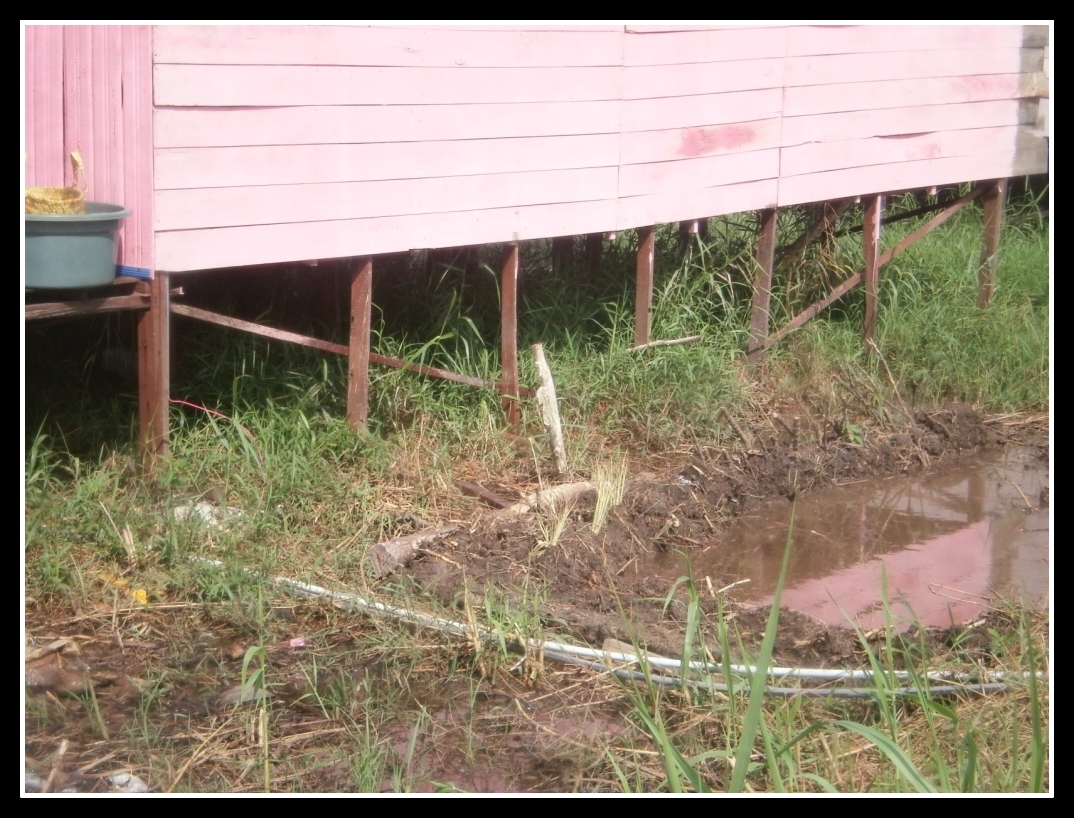
RAWA DI SEKITAR RUMAH PENDUDUK


PIPA AIR KE RUMAH PENDUDUK

JERNIH NYA SUNGAI INI

PIPA AIR KE RUMAH PENDUDUK

PIPA AIR KE RUMAH PENDUDUK : SEMOGA PURE IT BISA MEMBANTU PEMBELIAN PIPA AIR BAGI MASYARAKAT TIDAK MAMPU

JAMBAN TEMPAT MENGAMBIL AIR : BUKAN TOILET ATAU TEMPAT SAMPAH


SUNGAI DENGAN PIPA SALURAN AIR

SUNGAI YANG BAIK : BUKAN TEMPAT SAMPAH

SELANG PIPA AIR UNTUK MENGALIRKAN AIR SUNGAI


SUMUR DENGAN SIMPANAN AIR SUNGAI :

SUMUR DENGAN SIMPANAN AIR SUNGAI

JANGAN SAMPAI SUNGAI INDONESIA JADI WC TOILET TERPANJANG DI DUNIA DAN BAK SAMPAH TERBESAR DI DUNIA